DOL Proposal Estimated to Move $15 Billion Out of ESG Funds
The U.S. Department of Labor proposed ERISA changes it estimates would shift more than $15bn out of ESG funds, with comments due January 25, 2027.
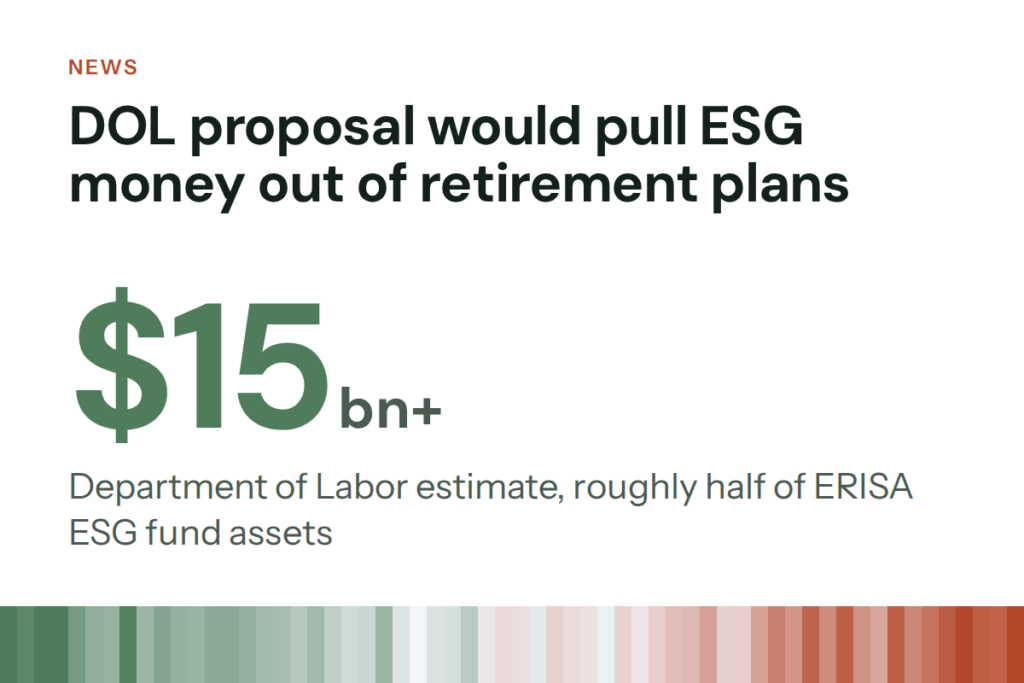
The U. S. Department of Labor has proposed amendments to its ERISA investment rules that it estimates would move more than $15 billion of retirement plan assets out of ESG funds, with public comments open until January 25, 2027.
The figure matters to finance and sustainability teams because it represents roughly half of the assets now held in ESG-related funds inside plans covered by the Employee Retirement Income Security Act. Plan sponsors, asset managers and fund providers that built products around the 2022 rule would face a narrower set of reasons for selecting and keeping those funds.
What the U. S. Department of Labor Proposes to Change
The U. S. Department of Labor wants to remove the language in the current rule saying that the risk and return factors a fiduciary considers can “include the economic effects of climate change and other environmental, social, or governance factors.” It would also clarify that ERISA plan fiduciaries must act exclusively to provide retirement income or financial benefits to plan participants and beneficiaries.
The proposal would eliminate the so-called tiebreaker test, which lets a fiduciary weigh ESG factors when two investment options are equal in financial materiality. It would also drop a provision allowing fiduciaries to take participants’ preferences into account when building investment menus, which the department said is often used to justify adding ESG fund options.
The U. S. Department of Labor stressed that removing the ESG wording does not create an outright ban. Fiduciaries can still consider climate and other ESG factors where they are relevant to an investment’s risk and return profile, but they must base decisions solely on such factors.
“Our proposed rule makes clear that retirement plan fiduciaries must make investment decisions solely in the financial interests of workers and retirees, not to advance political or social agendas.”
Keith Sonderling, U.S. Secretary of Labor
Proxy Voting and Engagement Face Tighter Rules
The proposal would also increase scrutiny of shareholder engagement and proxy voting. It would restore language from the 2020 rules clarifying that fiduciaries are not required to vote every proxy or exercise every shareholder right.
Fiduciaries would have to show prudence and diligence when selecting and monitoring proxy advisory firms and investment managers, so that plan resources are not used to advance political or non-financial agendas. The proposal would also bring engagement activities, such as meetings and discussions with company management, under the same fiduciary rules as proxy voting.
That extension is significant for managers who run stewardship programmes on behalf of pension clients, because engagement that was previously treated as routine would now sit inside the fiduciary framework. Glass Lewis and Institutional Shareholder Services are the firms most directly in view. President Trump issued an executive order in December 2025 that directed the department to review and revise its rules on the role of proxy advisors for ERISA plans and to increase transparency around their use, with a focus on ESG and DEI practices.
How the Proposal Differs From the 2022 and 2020 Rules
The Biden-era U. S. Department of Labor finalised its rule in 2022, allowing climate and ESG factors to be considered in private employer-sponsored retirement plans covered by ERISA. That rule required such considerations to be “based on factors that the fiduciary reasonably determines are relevant to a risk and return analysis,” and it kept the tiebreaker and the participant preference provisions that the new proposal would remove.
The first Trump administration had put rules in place in 2020 that set strict limits on ESG investing in ERISA plans and limited the ability of investment managers to promote sustainability goals through proxy voting. The new proposal restores part of that approach on proxy voting while keeping the position that ESG factors may be used when they bear on risk and return. In June 2025 the administration announced plans to overturn the 2022 rule, and the current proposal is the result.
The change continues a long-running swing between Republican and Democratic administrations over how far retirement money can be used for sustainability goals. Each rewrite has forced plan committees and their advisers to revisit investment policy statements and fund line-ups.
What Plan Fiduciaries Should Do Before January 25
The proposal sets no new obligation until a final rule is published, but plan fiduciaries can prepare now. The first step is to document the financial rationale for every ESG-labelled fund on a plan menu, so that each can be defended on risk and return grounds alone. Funds that were added because participants asked for them, or because they won a tiebreak, are the ones most exposed.
Investment policy statements and proxy voting policies should be reviewed against the proposed wording, as should the contracts and monitoring procedures for proxy advisors and outside managers. Teams that need structured evidence of the financial link between climate exposure and returns can start from a climate risk analysis of the holdings concerned, since the department leaves that route open. A well-kept ESG risk register gives a plan committee a record of why a factor was treated as financially material.
Anyone with a view on the proposal can submit it to the U. S. Department of Labor through the rulemaking docket before the comment period closes on January 25, 2027. Plan sponsors with ESG options on their menus have a direct interest, as do the fund providers that supply them. The department publishes its rulemaking activity through the Employee Benefits Security Administration.
The Wider Market Context for ESG Fund Managers
The proposal lands as US investors take a more divided approach to sustainability, even while disclosure rules in other jurisdictions continue to evolve. In the EU, negotiators recently reached a provisional agreement on sustainable fund rules, so managers selling across both markets face diverging requirements on how ESG products are defined and sold.
For managers that depend on retirement mandates, a shift of more than $15 billion would be felt in fund flows, though the figure covers only ERISA plan assets and is the department’s own estimate. Many funds also draw money from sources outside ERISA, and the private markets have continued to work through ESG integration on their own timetable. Data and analytics vendors that sell sustainable finance technology to asset owners may find demand moving toward tools that tie ESG data to financial performance, because that is the test the proposal keeps.
The department had previously proposed ERISA investment changes in October 2021, which led to the 2022 final rule. Its announcement of that earlier proposal shows the same sequence of proposal, comment period and final rule that the new amendments will follow.
What Comes Next for the U. S. Department of Labor Rule
After the comment period closes on January 25, 2027, the U. S. Department of Labor will review the submissions and decide whether to finalise the amendments as drafted or change them. The final text, and the date on which it takes effect, will determine how quickly plan committees must change their fund menus and proxy oversight.
ESG Tech Report
The go-to weekly newsletter for ESG and sustainability professionals. Trusted by 10,000+ industry leaders for authoritative, data-driven intelligence on the technology behind ESG. Join them today.