Google Signs PPA for 50 MW of Superhot Geothermal From Quaise
Google has signed a PPA for 50 MW of superhot geothermal power from Quaise Energy’s Project Obsidian in Oregon, with deliveries from as early as 2030.
Google has signed a power purchase agreement for 50 MW of superhot geothermal power from Quaise Energy’s Project Obsidian in Central Oregon, with deliveries starting as early as 2030. The deal follows $180 million of Quaise Energy funding in a Series B round that closed in August.
The power is meant to supply Google’s existing data centre operations in The Dalles, Oregon. The companies did not disclose the price, the contract length or the total investment in the project, although a Quaise spokesperson put the value of the deal at more than $500 million.
For sustainability and finance teams that buy power, the contract is a test of whether firm, clean electricity from a technology that has not yet run at commercial scale can be financed and accounted for. Corporate buyers have mostly signed for wind and solar, which are variable, so a contract for round-the-clock output raises different questions for carbon accounting, especially as the GHG Protocol rewrites its Scope 2 rules.
What Google and Quaise agreed for Project Obsidian
Project Obsidian sits on the south side of the Newberry caldera in Central Oregon, where the rock reaches superhot temperatures of roughly 300 to 500 degrees Celsius at about three miles depth, according to Quaise’s own project update. The first phase is a 50 MW development that uses conventional drilling, while the second phase is expected to be the first in the world to use millimetre-wave drilling and targets 250 MW.
Quaise is seeking buyers for the remaining capacity beyond Google’s 50 MW. It says superhot wells can produce up to 10 times more clean power per well than traditional geothermal systems, which depend on natural hot water reservoirs that rarely exceed 400 degrees Fahrenheit.
“We started Quaise to make the Earth’s most abundant energy source universally accessible – and this agreement marks a critical next step, not just for Quaise but for the entire clean energy sector.”
Carlos Araque, CEO and President, Quaise Energy
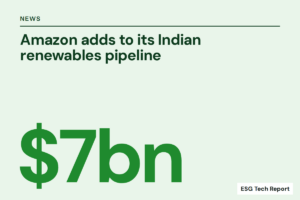
Google’s three Oregon data centre campuses already run on 83% carbon-free energy, and the company has invested more than $7 billion in the state since 2006. Between 2010 and 2025 it signed more than 240 agreements to buy nearly 35 GW of new clean energy.
“Google data centers are long-term investments in the communities we call home.”
Lucia Tian, Head of Advanced Energy Technologies, Google
Quaise expects Obsidian to create 200 to 400 construction jobs and more than 50 permanent roles, and says grid upgrades tied to the project will strengthen reliability for local consumers. Royalties from electricity sales are also set to benefit the region.
How Quaise Energy funding backs the project
The Series B brought Quaise Energy’s total funding to $280 million and came in two tranches this year, with $134 million announced in July and the rest following in August. Nabors Industries, the drilling contractor, invested $35 million in the round, which also gives Quaise access to Nabors’ drilling expertise.
Obsidian is expected to cost about $350 million to build across both phases, so the Series B does not cover the whole bill. Quaise is also looking to secure a further $100 million in grants and debt for the project, and a signed offtake contract with a buyer of Google’s credit standing is the kind of document lenders ask to see.
The source material points to a sequence in which the contract and the Series B capital position Quaise to seek financing for the millimetre-wave phase, but only after the first phase reaches commercial-scale superhot conditions. That makes the 2030 date for Phase 1 the milestone that governs the rest of the Quaise Energy funding plan.
Investors in private markets have backed geothermal developers with growing sums this year, and the field includes Zanskar, which raised $115 million to apply AI to geothermal exploration. Quaise differs because its pitch rests on drilling deeper and hotter rather than on finding better reservoirs.
The technology risk behind the Quaise Energy deal
Millimetre-wave drilling has not been demonstrated at the depths Obsidian would need. Quaise’s 2025 year-end update reported drilling 118 metres through granite at a test site in central Texas, with work under way toward 1 kilometre, against planned wells of up to 65,000 feet.
That is why the project is phased. Phase 1 uses conventional oil and gas drilling techniques to build an enhanced geothermal system, meaning an engineered reservoir in hot rock, so that the Google contract can be served without waiting for the newer method. Whether such reservoirs can operate reliably over long periods remains an open question for the sector.
Neither company has published the contract term, the permitting status or the route by which the power will reach Google’s load in The Dalles. Those are the details a buyer’s finance team would need to judge delivery risk, and the announcement leaves them out.
Scope 2 treatment for a firm clean power PPA
Under the GHG Protocol’s current Scope 2 Guidance, a buyer using the market-based method reports emissions using contractual instruments, so a PPA that conveys the associated energy attribute certificates can support a low or zero emission factor for the contracted megawatt-hours. The rule that matters today is the quality of those instruments and the market boundary, not when the power is generated.
That is set to change. The GHG Protocol launched a public consultation on hourly matching and deliverability on October 20, 2025. The proposal would apply deliverability rules to all market-based reporting and hourly matching to voluntary claims by organisations above a large consumption threshold, while hourly matching would not apply to residual mix reporting.
The draft includes feasibility measures: load profiles for hourly matching, exemption thresholds for smaller organisations, a legacy clause for existing contracts and a multiyear phased implementation. Firm geothermal output would fit hourly matching better than solar or wind, because it generates in every hour of the day, though Obsidian’s 50 MW would still cover only part of a large campus load.
Neither company has said whether the agreement is matched on an hourly, 24/7 carbon-free basis, and the announcement does not describe a matching method. Companies that report under rules such as California’s SB 253, which requires Scope 2 emissions disclosure from large companies, will need to follow how the final Scope 2 standard treats contracts signed before it takes effect.
What comes next for Quaise Energy and Obsidian
The nearest test for Quaise Energy is the first well at Obsidian, which is intended to confirm superhot temperatures at the site, followed by securing the remaining funding for Phase 1. The next date to watch is 2030, when Google’s power purchases can begin if drilling and construction stay on schedule, with the GHG Protocol’s final Scope 2 decisions on hourly matching to follow the close of its consultation.
ESG Tech Report
The go-to weekly newsletter for ESG and sustainability professionals. Trusted by 10,000+ industry leaders for authoritative, data-driven intelligence on the technology behind ESG. Join them today.