EU Deforestation Regulation: Key Requirements, Timeline, and Compliance Explained
Europe’s new deforestation law covers 16% of global trade-linked forest loss. Companies that cannot trace their supply chains down to plot level will not be selling into the bloc.
Everything businesses need to know about the EU Deforestation Regulation, from due diligence obligations and country risk benchmarks to enforcement timelines, penalties, and what comes next.
The European Union has long positioned itself as a global standard-setter on environmental policy, and the EU Deforestation Regulation represents its most ambitious attempt yet to reshape international commodity supply chains. Passed in mid-2023 as Regulation (EU) 2023/1115, the law requires businesses to prove that products sold in or exported from the EU market have not contributed to deforestation or forest degradation anywhere in the world.
Why the EU Deforestation Regulation Was Introduced
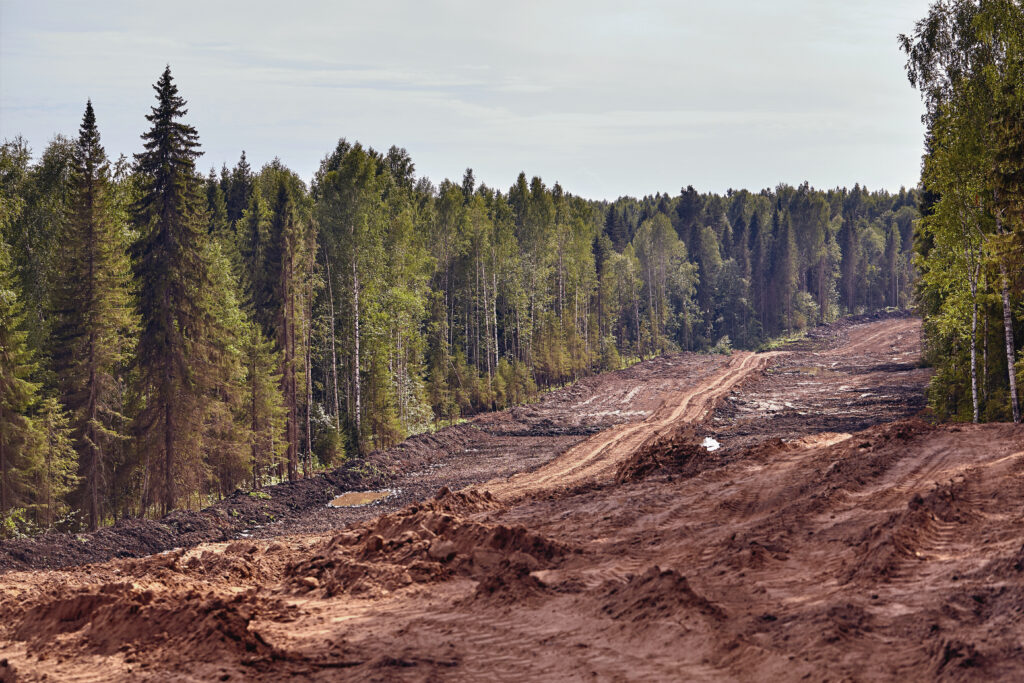
The numbers behind the legislation are sobering. Around 10% of the world’s forests have been lost over the past three decades, an area larger than the European Union itself. Agriculture remains the primary driver. According to research by WWF and the Stockholm Environment Institute, the EU is the world’s second-largest importer of deforestation-linked commodities after China, responsible for roughly 16% of global deforestation tied to international trade, or about 203,000 hectares of forest in 2017 alone. European consumption of palm oil, chocolate, coffee, and beef is directly tied to the clearing of tropical forests in South America, Central Africa, and Southeast Asia.
By making market access conditional on deforestation-free sourcing, Brussels hopes to use the bloc’s considerable purchasing power to change producer behaviour worldwide.
Which Commodities and Products Are Covered
The EU Deforestation Regulation targets seven key commodities: cattle, cocoa, coffee, oil palm, rubber, soy, and wood. It also covers derived products, including beef, leather, chocolate, furniture, and tyres. Books, newspapers, and other printed products were removed from the regulation’s scope in December 2025 following a reassessment of their deforestation risk.
For any of these products to be legally sold in or exported from the EU, three conditions must be met. The products must be deforestation-free, meaning they were not produced on land subject to deforestation or forest degradation after December 31st 2020. They must have been produced in compliance with all relevant laws in the country of origin. And they must be accompanied by a due diligence statement confirming the operator has verified the product’s origin and compliance.
The regulation significantly expanded on its predecessor, the EU Timber Regulation (EUTR), which applied only to timber and wood products. The EUDR fully replaced the EUTR upon entering into force, retaining its emphasis on legality and traceability while extending both the commodity scope and the depth of compliance obligations.
How EUDR Due Diligence Works
The due diligence framework sits at the heart of the regulation, consisting of three elements: information gathering, risk assessment, and risk mitigation.
Operators placing regulated products on the EU market must collect detailed supply chain data, including precise geolocation coordinates for every plot of land used in production. For commodities such as cattle, individual plot-level coordinates are mandatory. Increasingly, operators are turning to satellite monitoring and geospatial analysis tools to verify land-use history against the December 2020 baseline, cross-referencing geolocation data with deforestation alerts from platforms such as Global Forest Watch.
Once information is gathered, operators must assess whether there is a risk the commodity was produced on deforested land or in violation of local laws. Where risks are identified, mitigation steps are required before the product can enter the EU market. Due diligence statements are submitted through a dedicated EU information system, which launched in late 2024. As of mid-February 2026, the system is temporarily offline while the Commission deploys updates reflecting the December 2025 amendments, with access expected to resume after mid-April.
Country Risk Benchmarks and Enforcement Thresholds
The intensity of enforcement depends on country risk classifications. Under the EU Deforestation Regulation’s benchmarking system, the Commission classifies producer countries into three tiers, low, standard, and high risk, based on deforestation rates, agricultural expansion for regulated commodities, and the strength of local governance.
The first benchmarks were published in May 2025. Some 140 countries, including all EU member states, were designated as low risk. Only Russia, Belarus, Myanmar, and North Korea were classified as high risk, collectively accounting for just 0.07% of the EU’s imports of regulated commodities. Major producing nations such as Brazil, Indonesia, and the Democratic Republic of Congo were placed in the standard-risk category, drawing criticism from environmental groups who argued the classification underestimated the threat these supply chains pose.
For operators sourcing from low-risk countries, simplified due diligence applies: they must still collect full supply chain information but are not required to carry out risk assessment and mitigation. National authorities must inspect at least 1% of operators sourcing from low-risk countries, rising to 3% for standard-risk and 9% for high-risk origins. The benchmarking list is dynamic, with a first review scheduled for later this year.
Penalties for Non-Compliance
The EU Deforestation Regulation carries significant enforcement teeth. While member states are responsible for setting specific penalty frameworks under national law, the regulation establishes minimum standards. Fines can reach at least 4% of a company’s total annual EU turnover and may be increased to exceed the economic benefit gained from a breach. Repeat offenders face escalating sanctions.
Beyond financial penalties, non-compliant products are subject to confiscation, along with any revenues from their sale. Companies may be temporarily excluded from public procurement and public funding for up to 12 months. In serious or repeated cases, operators can be banned from placing regulated products on the EU market entirely. The Commission will also publish the names of companies found in breach, and under existing EU environmental crime directives, the most egregious violations could attract criminal penalties.
A Timeline of Delays
The regulation has been dogged by implementation setbacks. Its main provisions were originally due to apply from December 30th 2024, but concerns about readiness led to a first postponement to December 30th 2025. That reprieve proved insufficient, and in October 2025 the Commission acknowledged continuing challenges with the information system.
In December 2025, the European Parliament voted by 405 to 242 to delay enforcement by another year. The revised regulation, published as Regulation (EU) 2025/2650 in late December, requires large and medium operators to comply by December 30th 2026. Micro and small enterprises have until June 30th 2027. The amendments also introduced simplification measures, including a one-off simplified declaration for micro and small primary operators and reduced obligations for a new category of “downstream operators” further along the supply chain.
The Commission has been tasked with producing a formal simplification review by April 30th 2026. In January, Commissioner Jessika Roswall stated that the Commission does not favour another reopening of the regulation’s core text, a position reiterated at the 39th EUDR Expert Group meeting in February. Instead, the Commission is expected to deliver targeted tweaks through revised guidance documents, an updated delegated act amending the product scope, and improvements to the information system.
What the Regulation Means for Global Supply Chains
The EU Deforestation Regulation’s reach extends well beyond EU borders. Any company worldwide that exports regulated commodities to the European market must demonstrate deforestation-free sourcing, prompting significant investment in traceability systems and supply chain mapping, particularly among producers in Latin America, West Africa, and Southeast Asia.
The compliance burden falls disproportionately on smallholders in developing countries, many of whom lack the resources to meet these requirements. The European Commission has pledged 70 million euros through its Team Europe Initiative to support partner countries, but critics argue this falls short. There are also concerns about circumvention, with products potentially rerouted through low-risk countries. The EU Deforestation Regulation addresses this by requiring operators to trace commodities back to the actual country of production, not the country of export.
What Comes Next
Despite the delays and political compromises, the regulation remains the most ambitious demand-side deforestation law in the world. Its core framework is intact: mandatory due diligence, geolocation-based traceability, and a country benchmarking system that adjusts obligations to risk levels. Additional commodity categories, including certain palm oil and coffee derivatives, may be added through delegated acts later this year.
For businesses, the calculus is straightforward. The fundamental compliance obligations of the EU Deforestation Regulation are unlikely to change. Companies that delay building traceability and due diligence systems risk finding themselves locked out of one of the world’s largest consumer markets when enforcement begins in December. The regulation’s effectiveness will ultimately depend less on its ambition, which is considerable, and more on whether European institutions prove willing to enforce it.
ESG Tech Report
The go-to weekly newsletter for ESG and sustainability professionals. Trusted by 10,000+ industry leaders for authoritative, data-driven intelligence on the technology behind ESG. Join them today.