Carbon Credits Explained: A Simple Guide to Climate Offsets
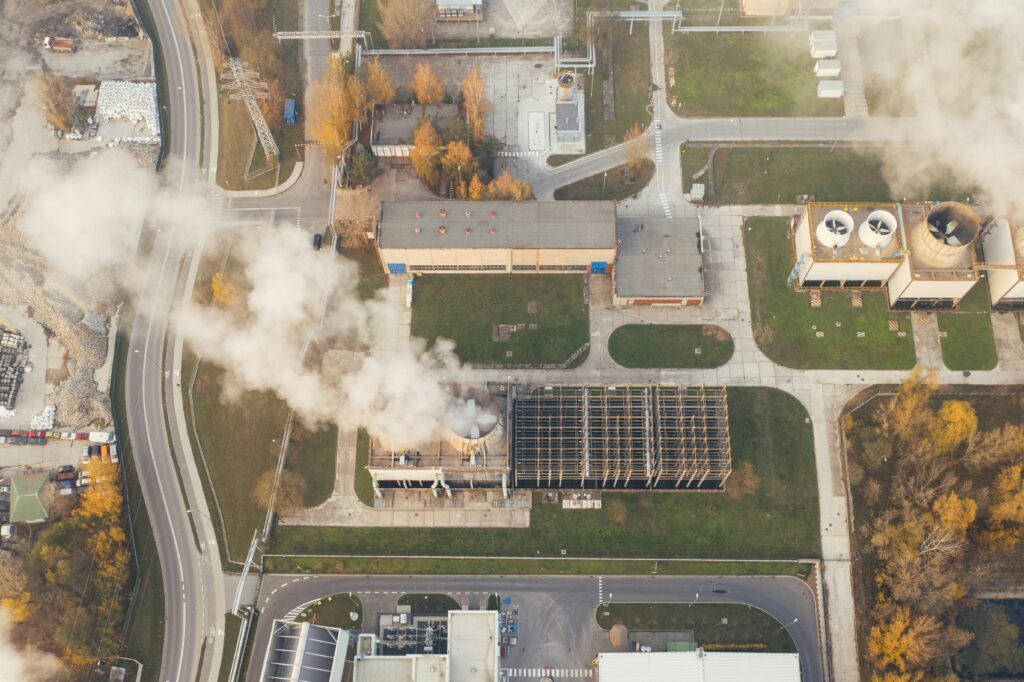
Carbon trading systems are becoming central to how nations and corporations pursue emissions reduction targets.
EU carbon allowances climbed to €74.80 per tonne in early April 2026, their highest level in seven weeks, as the European Commission signalled a measured approach to reforming the bloc’s emissions trading system. Carbon credits have evolved from an obscure policy instrument into one of the most consequential asset classes in global finance. Carbon pricing revenue exceeded $100 billion in 2023 alone, according to the World Bank, and the EU’s trading system has raised a cumulative €245 billion since 2013. For anyone with money in the market, a stake in a business or simply a utility bill to pay, understanding how these instruments work is no longer optional.
What Are Carbon Credits and How Do They Work?
A carbon credit is a tradeable certificate representing the removal or avoidance of one metric tonne of carbon dioxide from the atmosphere. If a project or company demonstrably reduces emissions, it earns certificates that can be sold to entities looking to offset their own pollution. Once retired, the certificate cannot be resold.
The logic is straightforward. By putting a price on pollution, the system gives businesses a financial reason to clean up. A cement producer in Poland might purchase offsets generated by a wind farm in Kenya if doing so costs less than retrofitting its own kilns. The atmosphere does not care where the tonne is removed, only that it is removed.
Compliance vs. Voluntary: The Two Offset Markets
Carbon credits trade across two distinct markets.
The compliance market is by far the larger. Governments set a legal ceiling on how much certain industries can emit, then issue tradeable permits up to that limit. Companies that stay below their cap can sell spare permits. Those that exceed it must buy more or face steep fines. This is known as cap-and-trade, and the biggest example is the EU Emissions Trading System, covering power generation, heavy industry, aviation and maritime shipping. California and China run their own versions.
EU permits, the global benchmark, traded between €60 and €80 per tonne through 2025 and into 2026. A consensus of major energy analysts compiled by GMK Centre expects prices to reach €126 per tonne by 2030 as governments phase out free allowances and the EU’s Carbon Border Adjustment Mechanism takes full effect. When that happens, imported goods from countries without comparable carbon pricing will face levies at the EU border, a cost that could ripple through supply chains and touch consumer prices on everything from steel to fertiliser.
The voluntary market is smaller but growing fast. Valued at approximately $1.6 billion in 2025, it is projected to reach $47.5 billion by 2035, according to Roots Analysis. Here, companies buy carbon credits not because regulators force them to, but because investors, customers or their own boards demand it. Voluntary offsets come from projects ranging from cookstove distribution to direct air capture and mangrove restoration, verified by standards bodies such as Verra and Gold Standard.
How Carbon Credits Are Priced
Pricing is anything but uniform. In compliance markets, supply and demand within a regulated framework set the value. Tighter caps mean higher prices. Slower economies mean lower ones.
Voluntary pricing is far more fragmented. A verified reforestation offset might trade for $5 to $15 per tonne, while a direct air capture certificate, which physically sucks CO2 from the sky, can command $600 or more. The gap reflects differences in quality, durability and side benefits such as biodiversity protection.
Major banks including Barclays, Citigroup and Morgan Stanley now run dedicated trading desks. Exchanges such as CBL Markets and AirCarbon Exchange handle price discovery, while futures and options trade on ICE and the European Energy Exchange. Carbon is increasingly traded like any other commodity.
Why Corporations Are Investing in Carbon Credits
For companies in regulated industries, purchasing offsets is simply the cost of doing business. Maritime shipping entered the EU’s trading system in 2024, with operators now required to surrender allowances covering 100% of verified emissions from 2026. Airlines face similar obligations. Miss the target and the fines dwarf the cost of the permits themselves.
In the voluntary space, the motivations are more strategic. Microsoft announced in January 2025 the purchase of more than 3.5 million offset units to compensate for emissions from AI development. The Symbiosis Coalition, a consortium of Google, Meta, Microsoft and Salesforce, has pledged up to 20 million tonnes in nature-based removals by 2030. These are bets on a regulatory environment that is tightening everywhere.
Sceptics, however, remain vocal. The Science Based Targets initiative, which sets the benchmark for credible corporate climate pledges, reaffirmed in 2024 that offsets cannot substitute for direct emissions reductions, and is overhauling its net-zero standard to further restrict their use.
The Integrity Crisis: Phantom Credits and the Verra Scandal
The credibility of this market hinges on a basic question: do the projects behind the certificates actually deliver? A nine-month investigation published in January 2023 by The Guardian, Die Zeit and SourceMaterial found that roughly 94% of rainforest offsets certified by Verra did not represent genuine emissions reductions. Those certificates accounted for about 40% of all credits Verra had approved.
Verra issued a detailed rebuttal, arguing the investigation relied on flawed data. CEO David Antonioli resigned in May 2023, and the episode shook confidence across the voluntary market.
Two problems sit at the heart of the controversy. The first is whether the emissions reduction would have happened anyway without the money from credit sales. A wind farm built in a country with generous renewable subsidies might have been constructed regardless, making the credits it generates essentially hollow. The second is permanence. A forest planted to absorb carbon can burn down, get logged or dry out. A study published in Global Change Biology found that the insurance reserves maintained by major registries are too small to cover these losses.
How Countries Are Building a Global Carbon Trading Framework
One of the most significant structural shifts is the Paris Agreement’s Article 6, finalised at COP26, the 2021 UN climate summit in Glasgow. In plain terms, it lets countries trade emissions reductions with each other. If Kenya reduces more than its climate target requires, it can sell the surplus to a country that is falling short, with safeguards to prevent both sides from claiming the same tonne.
The framework replaces the Kyoto Protocol’s older crediting system and is already reshaping how emerging economies approach climate policy. Indonesia opened its IDX Carbon exchange to international buyers in January 2025, two years after its domestic launch. India confirmed a federal carbon market will be operational by mid-2026. Across Asia, Latin America and Africa, governments are building pricing systems designed to connect to this framework.
Where Carbon Credit Markets Are Headed Next
The trajectory points firmly upward, integrity challenges and all. China expanded its national trading system in March 2025 to include cement, steel and aluminium, pulling roughly 1,500 firms and 3 billion tonnes of CO2 equivalent under a capped regime. The EU’s border carbon levy began its definitive phase in January 2026. A second European trading system covering buildings and road transport is set to launch in 2028, after a one-year postponement, and when it does, households heating with gas and drivers filling up with petrol will feel the price signal for the first time.
Technology is tightening oversight. Satellite monitoring, blockchain registries and AI-driven verification tools are making it harder for low-quality projects to hide. Direct air capture, while still expensive, offers permanent removals that sidestep the durability problems plaguing forest-based projects.
For anyone watching from the outside, the practical takeaway is this: the cost of emitting carbon is rising, with analysts forecasting EU prices could climb toward €126 per tonne by the end of the decade, and it is being wired into the price of goods, travel and energy in ways that were theoretical five years ago. Carbon credits are no longer a niche concern for policy wonks. They are becoming part of the plumbing of the global economy, and the bills are heading to everyone’s door.
ESG Tech Report
The go-to weekly newsletter for ESG and sustainability professionals. Trusted by 10,000+ industry leaders for authoritative, data-driven intelligence on the technology behind ESG. Join them today.