Preparing for UK Sustainability Reporting Standards: ESG Rules Explained
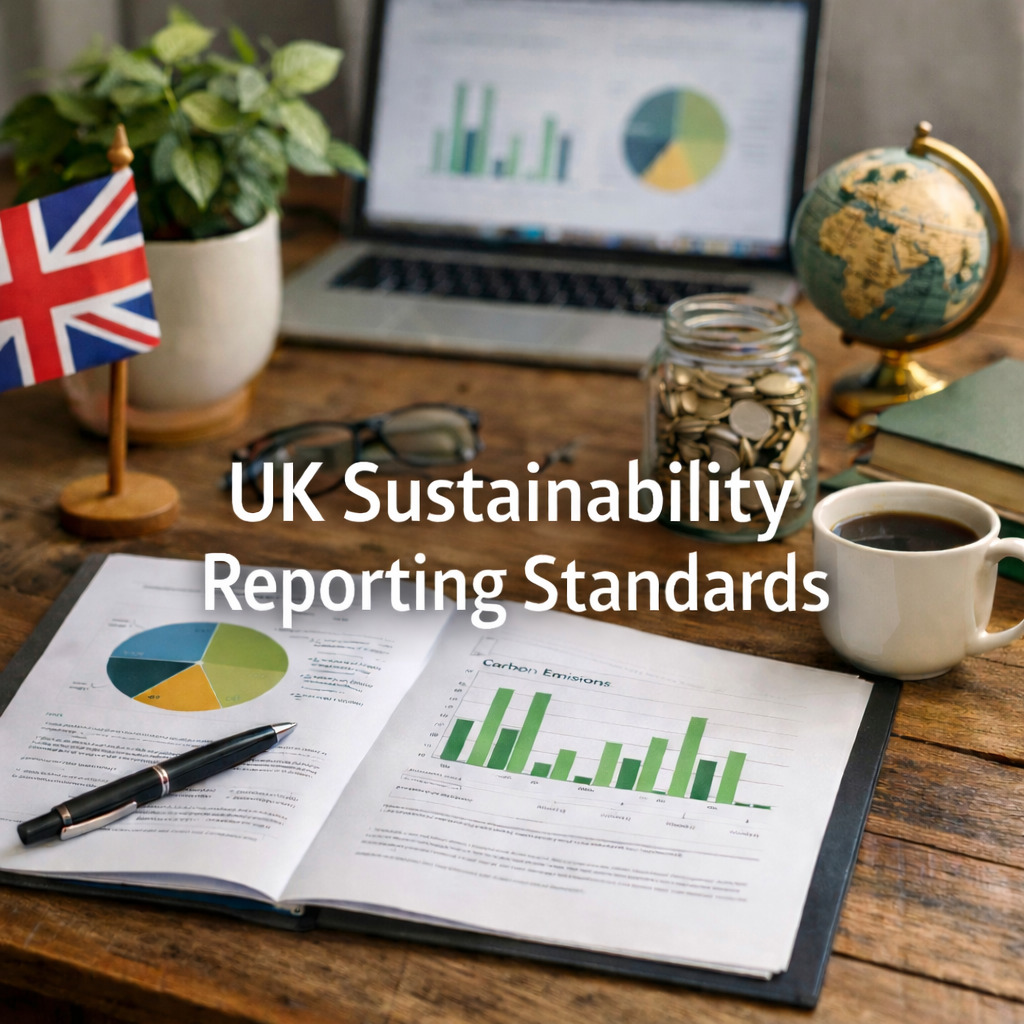
Climate reporting rules tighten: UK companies face mandatory sustainability disclosures from 2027.
Britain’s new disclosure regime will reshape how companies report on climate risk and sustainability. Here is what compliance teams need to know.
After years of fragmented environmental reporting requirements, British businesses face a decisive shift. The UK Sustainability Reporting Standards will establish a single, globally aligned framework for disclosing climate-related risks and sustainability information, replacing the patchwork of existing obligations that has long frustrated investors and compliance professionals alike.
For ESG analysts, finance directors and sustainability teams across the country, understanding these incoming rules is no longer optional. It is urgent.
The UK government’s consultation on the exposure drafts closed on 17 September 2025, and finalised standards are expected to be published in early 2026 (possibly February 2026 according to recent government statements). From that point, voluntary adoption begins immediately. But make no mistake: mandatory requirements will follow swiftly, with the Financial Conduct Authority proposing that climate disclosures become compulsory for listed companies from accounting periods beginning on or after January 2027.
What the Standards Require
The UK Sustainability Reporting Standards comprise two core components. UK SRS S1 establishes general requirements for sustainability-related financial disclosures, covering governance, strategy, risk management and metrics across environmental, social and governance topics. UK SRS S2 focuses specifically on climate, requiring detailed reporting on physical and transition risks, greenhouse gas emissions across all three scopes, and scenario analysis demonstrating business resilience.
Both standards are built on the global baseline established by the International Sustainability Standards Board, ensuring British disclosures will be comparable with those from companies in Australia, Japan, Canada and the more than 40 other jurisdictions adopting the ISSB framework. This alignment is deliberate. The government has stated its intention to position the UK as a leader in sustainable finance, and interoperability with international standards is central to that ambition.
Unlike the European Union’s Corporate Sustainability Reporting Directive, which requires companies to assess both financial materiality and their impact on the environment, the UK Sustainability Reporting Standards adopt a single materiality lens. Disclosures focus on how sustainability matters affect enterprise value, an approach designed to meet investor information needs rather than broader stakeholder concerns.
This difference matters. The EU’s double materiality approach forces companies to report on their environmental and social impacts whether or not those impacts affect the bottom line. The UK’s investor-focused model is narrower and arguably less ambitious, though proponents argue it avoids the complexity and subjectivity that has plagued early CSRD implementations. Critics counter that ignoring wider stakeholder impacts allows companies to sidestep accountability for harms that don’t immediately translate to financial risk.
“SECR was about reporting what you emit. UK SRS is about proving you understand how sustainability affects your business value.”
Timeline and Phased Implementation
The regulatory calendar is now taking shape. The FCA published its consultation on incorporating the UK Sustainability Reporting Standards into the Listing Rules on 30 January 2026, with the consultation closing on 20 March 2026. Final rules are expected in autumn 2026. For listed companies, mandatory climate disclosures under UK SRS S2 will apply to accounting periods beginning on or after 1 January 2027, meaning first reports will appear in 2028.
Scope 3 emissions, covering indirect emissions across the value chain, present particular challenges. Acknowledging the difficulty of obtaining reliable data from suppliers and customers, regulators have proposed a comply-or-explain approach for Scope 3, with an optional one-year transitional relief. The practical effect is that mandatory Scope 3 reporting will not bite until accounting periods beginning in January 2028.
The relief period is necessary because Scope 3 data quality remains poor across most sectors. Many companies still rely on spend-based estimates rather than actual supplier emissions data, and the methodologies for calculating value chain emissions vary widely. This creates a risk: companies may report numbers that appear precise but rest on shaky assumptions. Auditors and investors should treat early Scope 3 disclosures with appropriate scepticism.
Broader sustainability disclosures under UK SRS S1, covering non-climate topics such as biodiversity, water and social factors, will also operate on a comply-or-explain basis. Companies unable to report can explain their reasons and outline steps toward future compliance. A two-year climate-first relief allows businesses to focus initially on climate before expanding to wider sustainability matters.
Key Dates for Compliance Teams
Early 2026: Final UK SRS S1 and S2 published for voluntary use
30 January 2026: FCA published consultation on UK SRS adoption for listed companies
20 March 2026: FCA consultation closes
Mid 2026: Interim sustainability assurance register established
Autumn 2026: FCA finalises Listing Rules
1 January 2027: Mandatory UK SRS S2 climate disclosures begin
1 January 2028: Scope 3 comply-or-explain requirement effective
1 January 2029: Non-climate sustainability disclosures expected
Which Companies Will Be Affected
The initial focus falls on UK listed companies, which already report against Task Force on Climate-related Financial Disclosures recommendations under existing FCA rules. For these businesses, the transition to UK Sustainability Reporting Standards represents evolution rather than revolution, though the increased granularity and rigour should not be underestimated.
Beyond the listed universe, the government has signalled its intention to extend requirements to economically significant private companies through amendments to the Companies Act. Large private businesses, financial institutions and potentially companies within the supply chains of listed entities should therefore prepare for eventual inclusion. The existing Streamlined Energy and Carbon Reporting framework, which applies to companies meeting two of three thresholds covering employees, turnover and balance sheet size, is expected to be phased out once UK SRS becomes law.
Mid-sized companies face a particular burden here. They lack the dedicated sustainability teams of FTSE 100 firms but will still need to meet the same reporting standards. The compliance cost (in staff time, external consultants, and systems upgrades) could be substantial. The government has offered no financial support or simplified reporting pathway for smaller listed companies, a gap that industry groups have criticised.
Data Systems and Technology
For ESG analysts and compliance professionals, the operational challenge is substantial. The standards require sustainability data to meet the same quality and audit standards as financial reporting. This is not a task that spreadsheets can handle reliably at scale.
Specialist reporting software has become essential infrastructure for companies navigating multiple disclosure frameworks. Modern platforms allow sustainability teams to centralise data collection across Scopes 1, 2 and 3, automate calculations using recognised methodologies, and generate outputs aligned with ISSB standards, European requirements and domestic obligations simultaneously. The best systems provide full audit trails, enabling the third-party assurance that regulators increasingly expect.
That said, companies should evaluate whether their existing enterprise resource planning or sustainability management systems can be adapted before investing in new platforms. Software providers are positioning their products as essential, but the market is crowded and not all solutions deliver what they promise. Procurement teams should demand proof of concept trials and speak to existing users before committing to long-term contracts.
Assurance and Credibility
The government is also building an oversight regime for sustainability assurance. The Financial Reporting Council has been tasked with establishing an interim register of qualified assurance practitioners by mid-2026, creating a new profession-agnostic category that encompasses both traditional auditors and specialist sustainability consultancies.
While assurance remains voluntary for now, the direction of travel is clear. The FCA proposes requiring listed companies to disclose whether they have obtained third-party assurance over their UK Sustainability Reporting Standards disclosures. Companies that invest early in assurance-ready processes will find themselves better positioned as expectations tighten.
The challenge is capacity. There are not enough qualified sustainability assurance practitioners in the UK to meet likely demand when requirements become mandatory. Audit firms are training staff rapidly, but building genuine expertise in carbon accounting, scenario analysis and climate risk assessment takes time. Companies seeking assurance in 2027 and 2028 may face delays and inflated fees as the market adjusts.
What Could Go Wrong
Rushing compliance creates risks. Companies under pressure to produce their first UK SRS reports may be tempted to overstate their climate resilience or underplay risks that are difficult to quantify. Greenwashing accusations have already damaged reputations in sectors from oil and gas to fashion. Regulators and NGOs will scrutinise early disclosures closely, and companies caught misrepresenting their position will face public backlash and potential enforcement action.
There is also regulatory risk. While the 2027 deadline appears firm, political pressure or economic disruption could still alter the timeline or scope of requirements. Companies investing heavily in compliance systems should build flexibility into their approach and avoid locking themselves into rigid processes that may need to change.
Finally, the assurance gap creates a chicken-and-egg problem. Without enough qualified practitioners, some companies may struggle to obtain the assurance that investors expect, even if their underlying data and processes are sound. This could create a two-tier market where well-resourced firms secure credible assurance while smaller companies are left with limited-scope reviews that fail to satisfy stakeholders.
Why This Matters Beyond Compliance
The UK Sustainability Reporting Standards represent more than a regulatory checkbox. They signal a fundamental shift in how businesses communicate their exposure to sustainability risks and their strategies for navigating the transition to a low-carbon economy.
For companies that embrace this shift, the rewards extend beyond avoiding penalties. Credible climate disclosure increasingly affects access to capital. Green bonds, sustainability-linked loans and transition finance facilities all require robust ESG data. Banks and investors are using climate metrics to inform credit decisions and portfolio allocation. Companies that cannot demonstrate their understanding of climate risk may find themselves paying higher borrowing costs or excluded from investment mandates altogether.
Customer and supplier relationships are also changing. Major corporations are demanding climate data from their supply chains, and procurement decisions increasingly factor in carbon intensity. Retail customers, particularly younger demographics, show growing preference for brands with credible sustainability credentials. The evidence base is imperfect, but the trend is clear.
Competitive advantage matters too. Early movers in climate disclosure have used the process to identify operational efficiencies, reduce energy costs and spot emerging market opportunities in low-carbon products and services. The disclosure process, done properly, forces strategic thinking about resilience and adaptation that pays dividends beyond the annual report.
Preparing Now: Five Priority Actions
Smart companies are not waiting for mandatory deadlines. Those already reporting under TCFD or SECR have a foundation to build on, but gaps remain. Here are the immediate priorities:
1. Conduct a data gap analysis this quarter. Map your current sustainability data collection against UK SRS requirements. Identify which Scope 3 categories you can measure reliably and which require new supplier engagement. Commission this work now, not in 2026.
2. Strengthen governance structures. UK SRS requires demonstration of board-level oversight of climate risk. If your board lacks sustainability expertise, recruit non-executive directors with relevant experience or establish a dedicated board committee. Document decision-making processes and risk discussions.
3. Build scenario analysis capability. Most companies lack internal expertise in climate scenario modelling. Engage external specialists to develop at least two scenarios aligned with the Network for Greening the Financial System frameworks. Use these to stress-test business strategy and inform capital allocation decisions.
4. Engage suppliers on Scope 3 data. Start conversations with your largest suppliers now about their emissions measurement and reporting capabilities. Provide guidance on the data you will need and timelines for delivery. Consider offering support to strategic suppliers who lack resources to measure their own emissions.
5. Pilot assurance early. Even though assurance is not yet mandatory, commission a limited-scope assurance engagement over your 2026 sustainability data. Use this to identify process weaknesses and data quality issues before they become problems in your first mandatory report. Early movers will also secure access to the best assurance providers before capacity constraints bite.
The Countdown Has Begun
The UK Sustainability Reporting Standards will reshape corporate disclosure whether companies are ready or not. The timeline is tight, the requirements are demanding, and the stakes are high. But this is also an opportunity. Companies that treat sustainability reporting as a strategic exercise rather than a compliance burden will emerge stronger, more resilient and better positioned for the transition ahead.
Those who act now will compete better. Those who delay will find themselves scrambling to catch up as 2027 approaches, and by then, it may already be too late.
ESG Tech Report
The go-to weekly newsletter for ESG and sustainability professionals. Trusted by 10,000+ industry leaders for authoritative, data-driven intelligence on the technology behind ESG. Join them today.